
Frequently asked questions
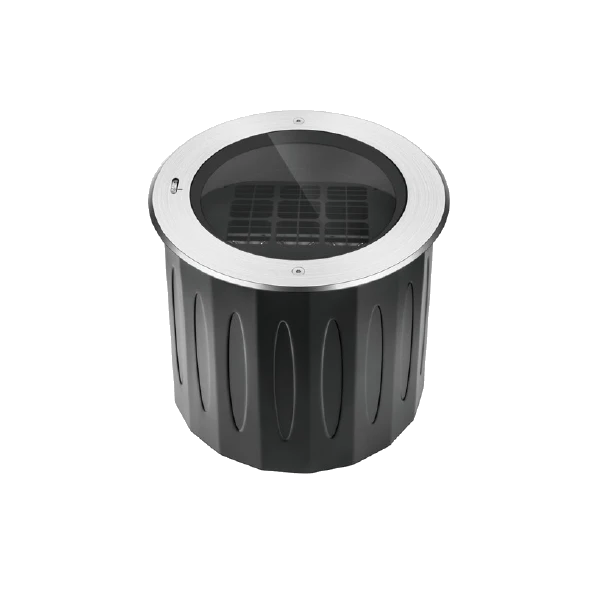
For historical buildings, we use several non-invasive methods: ground-recessed luminaires in front of the facade, luminaires on poles in the vicinity of the building, or linear LED strips in cornices. We avoid drilling into the facade. We use warm white 2700-3000 K to highlight stone and brick structures. Asymmetric optics ensure uniform illumination without glare. The control system allows different lighting scenes for different occasions.
The colour temperature depends on the material and purpose: 2200-2700 K (very warm) for historical buildings and creating a cosy atmosphere, 3000 K (warm white) for brick and wooden facades, 4000 K (neutral) for modern concrete and glass buildings, 5000-6000 K (cool) for a futuristic look or winter effects. For dynamic lighting, we use RGBW luminaires with the ability to change colours according to events.
We minimize light pollution by using precision optics that direct light only onto the facade without overspill. Luminaires are installed with a slight downward tilt, never horizontally or upward. We use shields and anti-glare louvres. Intensity is adapted to the surrounding environment - lower in residential zones. The system automatically switches off or dims lighting after midnight. We comply with the CIE 150 standard for limiting obtrusive light.
Current trends include: media facades with LED pixels for dynamic images and animations, Human Centric Lighting that changes colour temperature throughout the day, interactive lighting that responds to human movement, minimalist linear lighting accentuating building lines, and biodegradable luminaire materials. There is growing interest in solar power supplemented by battery storage and IoT integration for smart city concepts.
Park lighting combines safety with aesthetics. Main paths are illuminated to 10-20 lx using bollard luminaires 3-4 m tall. Trees are uplighted from below with narrow-angle ground luminaires. For water features, we use underwater LED with IP68. Benches and resting areas need soft ambient light of 30-50 lx. We avoid over-illumination that disturbs nocturnal wildlife. We use warm colours 2700-3000 K and motion sensors to save energy.